
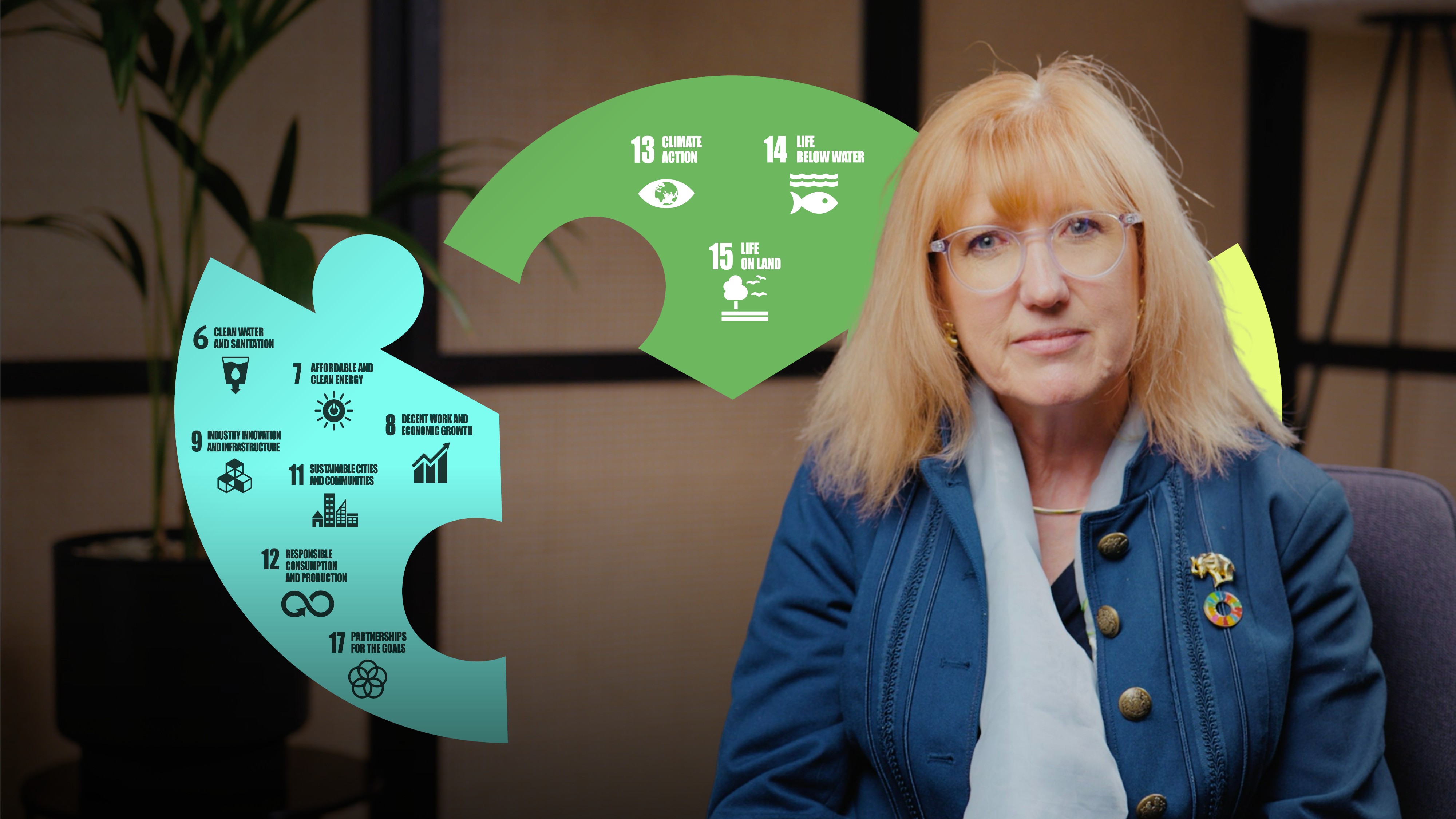
Social Infrastructure Sustainable Development Goals (SDGs)

Wendy Whewell
ESG and Climate Change Specialist
Explore the Sustainable Development Goals that create the foundations for resilient societies through clean water, energy, infrastructure, sustainable cities and global collaboration.

Explore the Sustainable Development Goals that create the foundations for resilient societies through clean water, energy, infrastructure, sustainable cities and global collaboration.
Subscribe to watch
Access this and all of the content on our platform by signing up for a 7-day free trial.
Social Infrastructure Sustainable Development Goals (SDGs)
5 mins
Key learning objectives:
Explain the purpose of the SDGs focused on social infrastructure
Understand how infrastructure and essential services support sustainable development
Recognise the importance of responsible production and consumption
Explain why partnerships are critical to achieving the SDGs
Overview:
Subscribe to watch
Access this and all of the content on our platform by signing up for a 7-day free trial.
Access to reliable water, sanitation, energy, transport and other essential services improves quality of life while supporting economic activity, public health and community resilience. Without these foundations, long-term sustainable development becomes much harder to achieve.
The way resources are produced, used and disposed of has significant environmental and economic consequences. Using resources more efficiently, reducing waste and encouraging more sustainable production helps protect natural systems while supporting future prosperity.
As urban populations continue to grow, cities must balance economic development with environmental protection and social inclusion. Sustainable planning improves quality of life while reducing pollution, resource use and environmental impacts.
Why are partnerships fundamental to achieving the SDGs?
Many sustainability challenges cross national borders and sectors. Governments, businesses, civil society and international organisations all have different expertise and resources, making collaboration essential for delivering meaningful and lasting progress.
Subscribe to watch
Access this and all of the content on our platform by signing up for a 7-day free trial.

Wendy Whewell
There are no available Videos from "Wendy Whewell"