
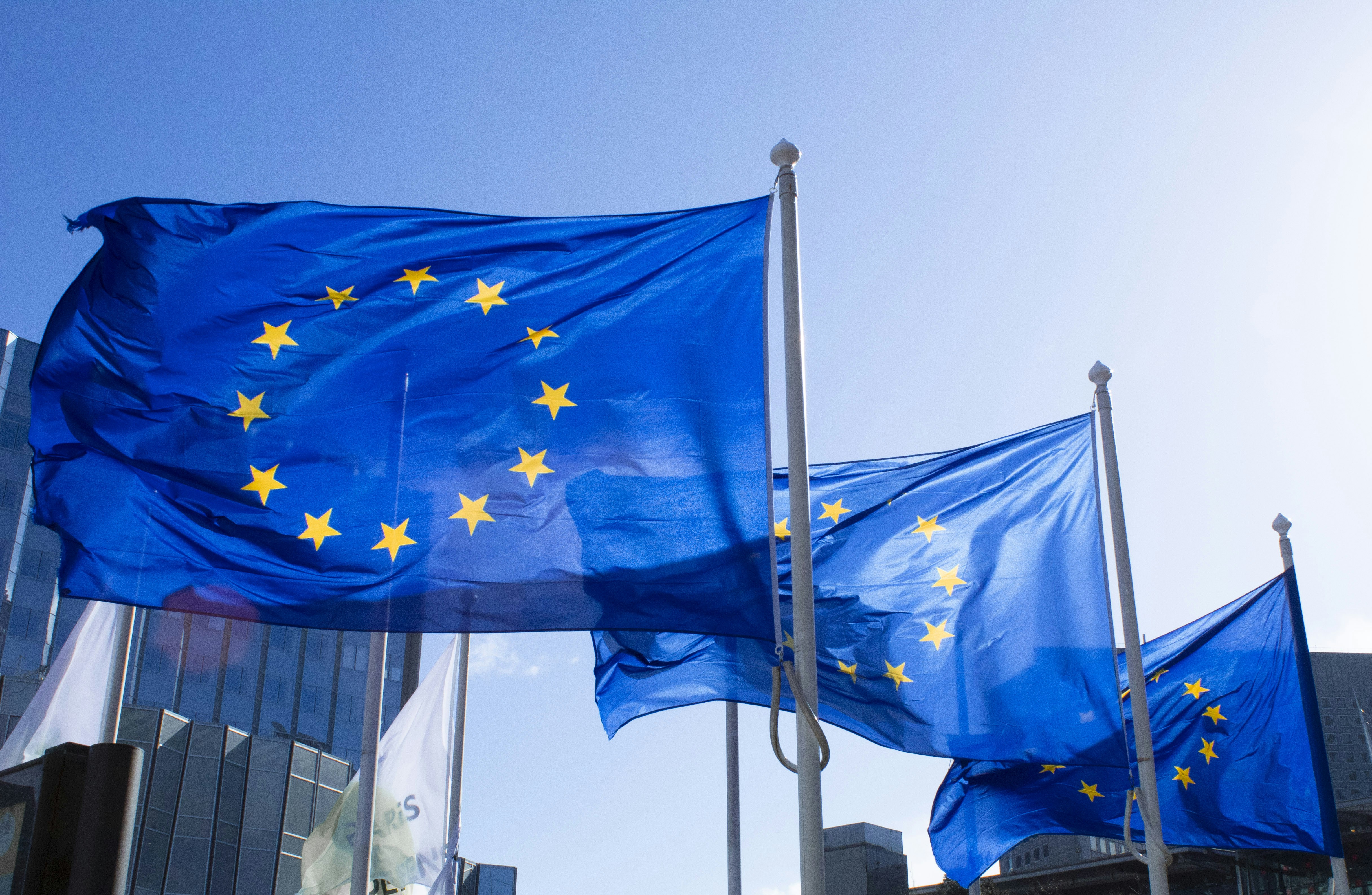
The EU AI Act: what it means for your business (and how to actually prepare)

Learning Adviser
xUnlocked Learning Team
The EU AI Act's compliance deadlines just shifted by up to 16 months — here's what actually changed, what's still on schedule, and how to prepare either way.
The EU AI Act is the world's first comprehensive law regulating artificial intelligence. It sorts every AI system into one of four risk tiers — unacceptable, high, limited, and minimal — and sets legal duties for the organisations that build, sell, or use them.
Enforcement began in February 2025, and the rules for high-risk systems have just been revised. Here's what's changed, what hasn't, and how to get your team ready.
Did the EU AI Act deadlines just change? Here's what's new
On 29 June 2026, the Council of the EU gave its final sign-off to a package of amendments (part of the EU's "Digital Omnibus" simplification effort) that pushes back several key compliance dates for high-risk AI systems.
- High-risk AI systems deployed in recruitment, credit scoring, biometrics, critical infrastructure, and other high-risk settings — the deadline shifts from 2 August 2026 to 2 December 2027.
- High-risk AI in regulated products (medical devices, machinery, toys) — pushed from 2 August 2027 to 2 August 2028.
- Transparency rules for AI-generated content (watermarking and labelling) — previously due before 2 August 2026, now have until 2 December 2026.
This isn't a repeal, and it doesn't touch the Act's core structure — AI systems are still classified on the same four-tier risk pyramid.
The delay is largely practical: businesses and national authorities have said that the criteria for what counts as "high-risk" remain genuinely hard to apply, and regulators want the technical standards in place before enforcement begins.
For companies building or deploying AI in the EU, that's breathing space. The obligations haven't disappeared, just moved — firms that ignore compliance now risk being caught out later, while firms that treat compliance as the only priority risk losing ground in a fast-moving market.
Brussels is trying to avoid a false choice between regulation and innovation: the Act was built to protect fundamental rights and give businesses legal certainty, and the Digital Omnibus is a bet that certainty also depends on rules being applied clearly, consistently, and on time.
Europe still wants to set the global standard for AI governance. The open question is whether it can do that without slowing its own industry down — but regulators haven't signalled tolerance for a pause. They've signalled they want more time to get it right.
That extra time is only useful if you spend it well. The businesses that come out ahead won't be the ones that wait for the Official Journal — they'll be the ones who use the runway to get their teams fluent in the Act now, before the next deadline is the one making headlines. That's exactly what the Guard Your Company Against EU AI Act Compliance Risks pathway is built for.
What You'll Learn
- The aims and structure of the EU AI Act.
- How the four-tier risk classification actually works, with real examples.
- What’s expected of you depending on whether you’re a provider, deployer, importer, or distributor.
- How to start preparing your organisation for a regulated AI landscape.
Inside the Pathway
This is a 12-module, on-demand video pathway (around an hour, including two interactive case studies) led by data and AI systems architect Pete Hannam. It's Foundational level and CPD-accredited. Here's a taste of what's covered — without giving away the full pathway.
The big picture: what is the EU AI Act?

Why did the EU decide AI needed its own rulebook? Pete opens with the thinking behind the Act and the principles — safety, transparency, and accountability — that everything else is built on. You'll also tackle a quickfire case study: can you tell what actually counts as "AI" under the Act?
The 4 tiers of AI risk

Unacceptable, high, limited, or minimal — the entire Act hinges on how AI systems are classified. This module explains what belongs in each risk tier using practical, real-world examples, before exploring the consequences of getting that classification wrong.
Case study: is it AI?

Put your knowledge to the test - can you identify what is and isn't AI? A case study is an in-depth examination of a realistic scenario related to the key learning objectives you've explored so far in the pathway. It's designed to help you apply the concepts and knowledge you've gained in a practical, real-world context.
How to be compliant when your AI is high risk?

To place a high-risk AI system on the EU market, organisations must follow the "blueprint for responsible AI" set out in Articles 8 to 15 of the EU AI Act. These are mandatory legal requirements, not optional best practices. Together, they form a comprehensive framework in which each element reinforces the others to create trustworthy AI.
While achieving compliance requires significant effort, the obligations are proportionate to the potential impact of these systems. High-risk AI is used to make or support decisions that can significantly affect people's lives — from credit scoring and recruitment to critical infrastructure and healthcare — so the Act requires a correspondingly high standard of accountability, transparency, and oversight.
Are you a Provider or a Deployer? (and why it matters)

The EU AI Act assigns organisations to specific roles to determine their legal responsibilities. Understanding where your organisation fits is one of the first and most important steps towards compliance. Depending on how you develop, deploy, import, distribute, or modify AI systems, you may fall into one or more of these categories.
Watch out for these 10 AI red flags

Is your AI system truly compliant, or are hidden risks exposing your organisation to regulatory action? Navigating the EU AI Act can be complex, but recognising these ten critical red flags — from prohibited practices such as manipulative AI and harmful social scoring to biometric categorisation and emotion recognition in the workplace — is an essential first step towards identifying risk and protecting your business.
Governance & what's next: 10 key takeaways

Finish the pathway with a concise recap of the ten most important lessons from the EU AI Act. Whether you're refreshing your own understanding or sharing the essentials with a colleague, this closing module distils the key concepts into a practical summary you can put to use immediately.
Ready to get ahead of the deadline?

Share "The EU AI Act: what it means for your business (and how to actually prepare)" on
Latest Insights

El Niño: Everyone is talking about it. But what does it actually mean for your business?
1st October 2026 • Maria Coronado Robles